Camping Water: How Much to Carry, Storage, Treatment and Filtering
Disclosure: As an Amazon Associate, OutbackKit earns from qualifying purchases. Some links on this page are affiliate links, so we may earn a small commission if you buy through them, at no extra cost to you. We only point to gear we’d be happy to take on our own trips.
Water is the one thing you can’t run out of. It matters for drinking, cooking, cleaning and hygiene, and in remote or hot parts of Australia it’s a safety issue. This guide covers how to plan how much you need, how to carry and store it, and how to make water from taps, tanks and creeks safer to drink.
This is general information only. For drinking-water safety, follow advice from your state or territory health department, and check campground or park information about whether water is treated.
How much water do you need?
There’s no single right answer. It depends on:
- Temperature and humidity. Hot weather dramatically increases how much you drink.
- Activity. Hiking, digging, recovering vehicles and setting up camp all add up.
- People. Adults, kids and anyone with health conditions have different needs.
- Cooking and cleaning. Pasta, rice, dehydrated meals, dishes and washing all use water.
- How far to the next reliable refill.
A rough way to plan: many remote travel guides suggest planning on at least several litres per person per day for drinking and basic cooking, and more in hot weather or if you’re washing. Treat that as a rough starting point, not a rule. Then:
- Estimate your daily use per person, generously.
- Multiply by the number of people and the days until a refill you’re confident in.
- Add a reserve for delays and breakdowns. In remote areas, that reserve can save lives.
Track your actual use on a short trip close to home. It’s the best way to learn what your group really needs.
Carrying and storing water
Containers
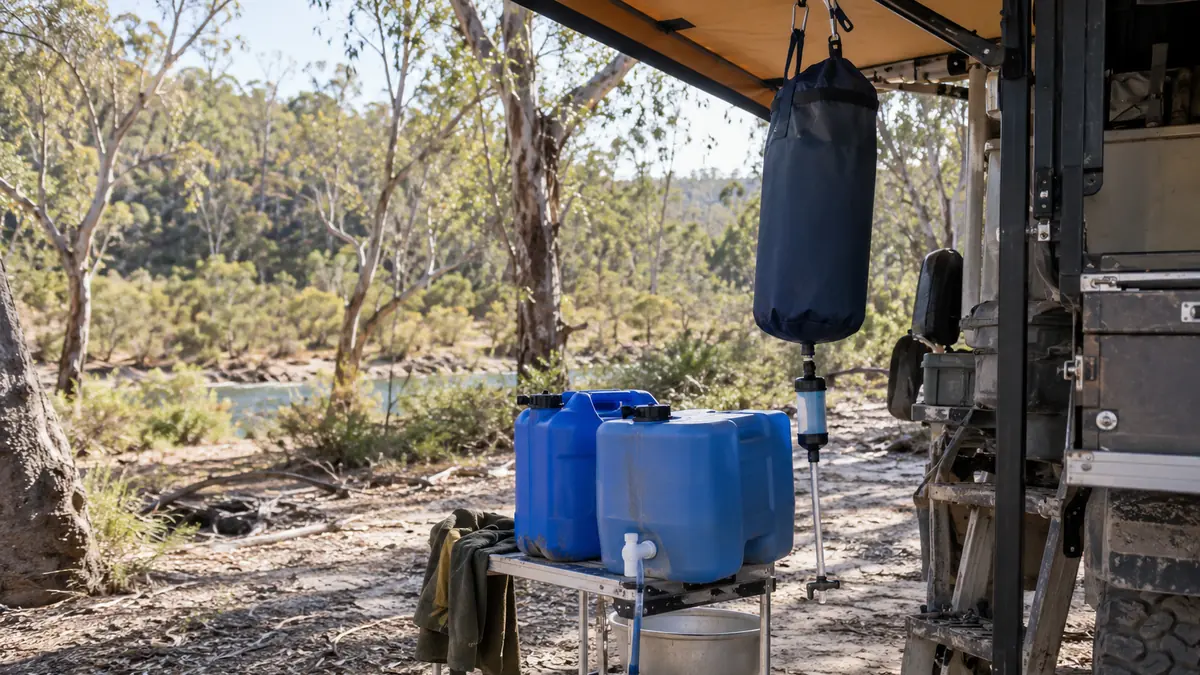
- Jerry cans made for drinking water are tough and stackable. (water jerry cans on Amazon)
- Collapsible containers save space when empty, but are less robust. (collapsible water containers on Amazon)
- Fixed water tanks in vehicles, trailers or campers carry a lot of water low in the vehicle.
- Water bladders and bottles for day walks.
Storage tips
- Use food-grade containers only, and never reuse fuel or chemical containers.
- Split water across several containers, so one leak or contamination doesn’t cost you everything.
- Secure containers properly. Water is heavy, and loose containers can become dangerous in a sudden stop. Stay within your vehicle’s payload limits.
- Keep containers out of direct sun where possible.
- Clean containers regularly and let them dry completely between trips.
- Label containers if you carry both drinking water and washing water.
Treating and filtering water
Water from creeks, rivers, rainwater tanks, bores and even some campground taps may not be safe to drink untreated. Look for signs at campgrounds, and if it says “untreated” or “not for drinking”, take that seriously.
Main treatment options
Boiling
- Bringing water to a rolling boil is a widely recommended way to kill disease-causing organisms. Follow your health department’s guidance on how long.
- Uses fuel and time, and doesn’t remove chemicals or sediment.
Filters
- Physically remove bacteria, protozoa and sediment, depending on the filter’s rating.
- Options include pump filters, gravity filters (great for camp), squeeze filters and filter bottles. (gravity water filters on Amazon) (filter bottles on Amazon)
- Many filters don’t remove viruses or chemicals, so check what each product is rated for.
- Pre-filter muddy water through a cloth to extend filter life.
Chemical treatment (tablets or drops)
- Lightweight and simple. Follow the product’s instructions for contact time. (water purification tablets on Amazon)
- Some products are less effective in cold or cloudy water, and can leave a taste.
UV purifiers
- Battery-powered pens or bottles. Work best in clear water.
Combining methods (for example filtering then treating) gives extra protection for doubtful sources.
Things treatment won’t fix
- Salty or brackish water isn’t made drinkable by normal camping filters.
- Chemical contamination from agriculture, mining or industry generally can’t be removed with standard camp filters. Avoid water near these sources.
- Algal blooms can produce toxins. Don’t drink or swim in water with visible scum or discolouration, and check for local warnings.
Hygiene and saving water
- Wash hands before cooking and after the toilet. Even a squirt bottle and soap helps prevent illness.
- Use a separate wash-water container so drinking water isn’t contaminated.
- Wipe plates before washing to save water.
- Use a basin and dispose of grey water well away from creeks, following local rules.
- Biodegradable detergent still doesn’t belong in waterways.
Water for remote travel
- Confirm refill points before you go. Don’t rely on bores, tanks or creeks marked on maps.
- Carry enough to get you to safety if your planned source is dry.
- If you break down, stay with your vehicle and ration water sensibly.
- See planning a remote outback trip for more.
Water checklist
- Daily water use estimated, with a reserve
- Food-grade containers, split across several
- Containers secured and within payload limits
- Filter, tablets or a way to boil water
- Separate washing water
- Refill points confirmed
Top of the line vs best value
Well-known options sold in Australia, if you want a starting point. We haven’t independently tested every one, prices change often, and the right choice depends on your trip, so check current prices, specs and warranty before buying. Not ready to buy? Pop it in your Amazon cart so it’s there when you are.
Water filter
- Top of the line: Katadyn Hiker Pro filter on Amazon · Add to Amazon cart: premium pump filter with a proven track record.
- Best value: Sawyer Squeeze on Amazon · Add to Amazon cart: budget-friendly, lightweight filter.
Further reading
The bottom line
Plan generously, carry water in more than one container, treat any water you’re not sure about, and confirm your refill points. Water is cheap insurance. Running short is never worth the risk.