Campfire Safety and Fire Bans in Australia
Disclosure: As an Amazon Associate, OutbackKit earns from qualifying purchases. Some links on this page are affiliate links, so we may earn a small commission if you buy through them, at no extra cost to you. We only point to gear we’d be happy to take on our own trips.
A campfire is the heart of many Aussie camping trips. It’s where you cook, warm up and tell stories. But Australia’s bushfire risk is real, and an escaped campfire can have devastating consequences. Fire rules exist for good reason, and penalties for breaking them can be severe. Here’s what you need to know to enjoy a fire safely and legally.
Fire rules differ by state, region, park and season, and they can change daily. Always check the fire authority in your state or territory, plus the land manager for where you’re camping, before lighting any fire.
Total fire bans: the basics
- A Total Fire Ban is declared by your state or territory fire authority on days when fires would be most likely to spread and be hard to control.
- During a Total Fire Ban, campfires are generally not allowed, and there are restrictions on other activities and equipment too. Some states may also restrict certain gas or liquid-fuel appliances in some circumstances.
- Bans can be declared for specific districts, so know which fire district you’re in.
- Fire danger ratings are published daily during the fire season. Higher ratings mean higher risk and stricter caution, even without a total ban.
Where to check
- NSW: NSW Rural Fire Service
- VIC: Country Fire Authority (CFA)
- QLD: Queensland Fire Department
- SA: Country Fire Service (CFS)
- WA: Department of Fire and Emergency Services (DFES)
- TAS: Tasmania Fire Service
- NT: NT Fire and Rescue Service and Bushfires NT
- ACT: ACT Emergency Services Agency
Also check the national park, state forest or campground’s own rules. Many parks ban fires all the time, or only allow them in provided fire pits. Fire restriction periods can also require permits for some fires.
Download your state’s emergency app or check its website each day of your trip, as conditions change.
Before you light a fire
- No Total Fire Ban for your district today
- Fires permitted at this campground or area
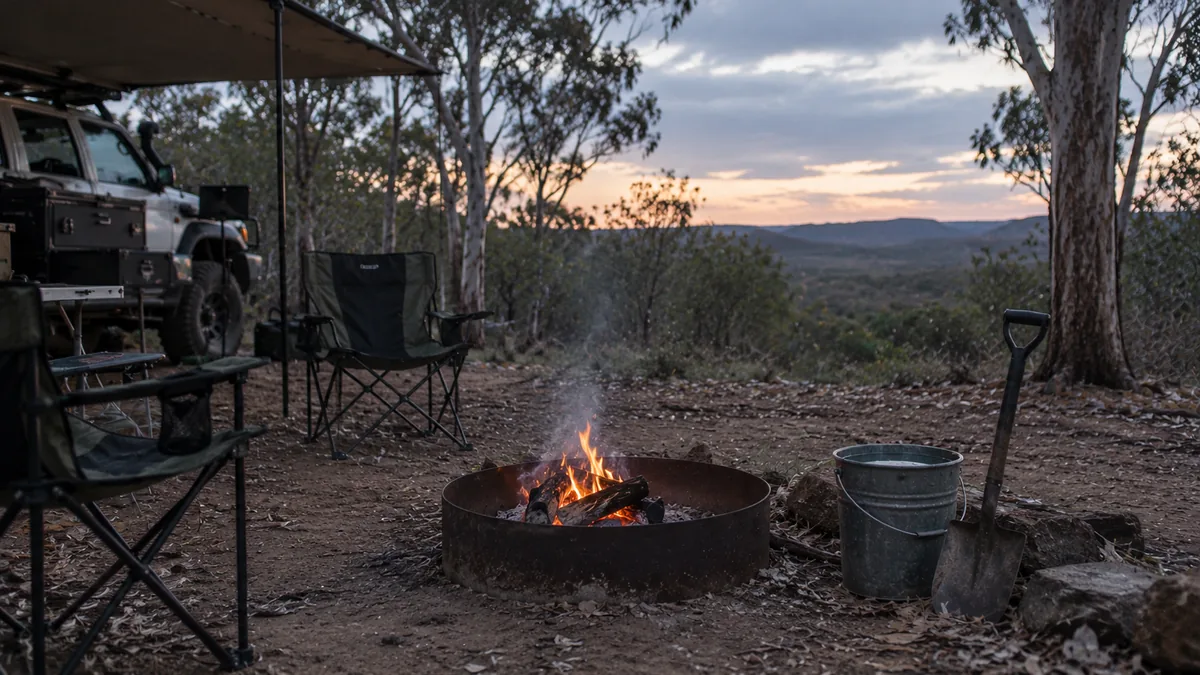
- Use an existing fire pit or ring where provided. Don’t create new ones.
- Clear the area of leaves, grass and anything flammable around the fire (NSW RFS guidance is to clear combustible material for at least 2 metres around the fire; other states and parks may set their own rules)
- Away from tents, overhanging branches, vehicles and gear
- Not in strong or gusty wind
- Water ready: a full bucket or container beside the fire before you light it (collapsible buckets on Amazon)
Building a safe campfire
- Keep it small. A small fire is easier to control and plenty for cooking and warmth.
- Use dead, fallen wood only where collection is permitted. Many parks prohibit collecting firewood, so bring your own from a legal source. Don’t bring wood from long distances, which can spread pests and disease.
- Never use petrol or other accelerants to start or revive a fire.
- Never leave a fire unattended, not even for a few minutes.
- Keep children and pets a safe distance away, and supervise constantly.
Putting a fire out properly
Coals buried under sand or dirt can stay hot for many hours and cause serious burns or reignite. Covering a fire with soil is not a safe way to put it out.
- Let it burn down to ash and coals well before you plan to leave or go to bed.
- Pour water over the fire, slowly and thoroughly. Use water, not soil or sand.
- Stir the ashes and coals with a stick or shovel.
- Pour more water, and stir again.
- Feel for heat by holding the back of your hand close above the ashes (don’t touch). If you can feel any warmth, repeat.
- It’s out when it’s cold to the touch.
Only leave when you’re certain it’s completely out.
Cooking without a fire
When fires are banned or not permitted, you can still eat well:
- Gas stoves are the most common option. Check whether any restrictions apply on Total Fire Ban days in your state. (camp stoves on Amazon)
- Portable gas fire pits give the look and warmth of a campfire without embers, but rules on their use during bans vary, so check first. (gas fire pits on Amazon)
- No-cook meals: wraps, salads, cold meats and pre-cooked dishes.
See our camp kitchen guide for more ideas.
Staying warm without a fire
- Warm layers, thermals and a beanie
- A good sleeping bag rated for the conditions (sleeping bags on Amazon)
- Hot drinks and a warm meal before bed
- An insulated jacket or a camp blanket
If a fire escapes
- Call Triple Zero (000) immediately.
- Only attempt to put out a small fire if it’s safe to do so.
- Move people to safety and follow instructions from emergency services.
- Know your exit route from the campground.
Bushfire safety while camping
- Check fire danger ratings and warnings every day.
- On high-risk days, consider moving to a safer location or postponing.
- Know where your nearest safe place is.
- Leave early if conditions are dangerous. Don’t wait for a warning.
Further reading
The bottom line
Check your state fire authority and the land manager every day, use existing fire pits, keep fires small and supervised, put them out with water until they’re cold, and have a no-fire backup plan. A safe campfire is one that’s never remembered for the wrong reasons.