Beach Camping in Australia: Sand Driving, Setup, Wind and Sun
Disclosure: As an Amazon Associate, OutbackKit earns from qualifying purchases. Some links on this page are affiliate links, so we may earn a small commission if you buy through them, at no extra cost to you. We only point to gear we’d be happy to take on our own trips.
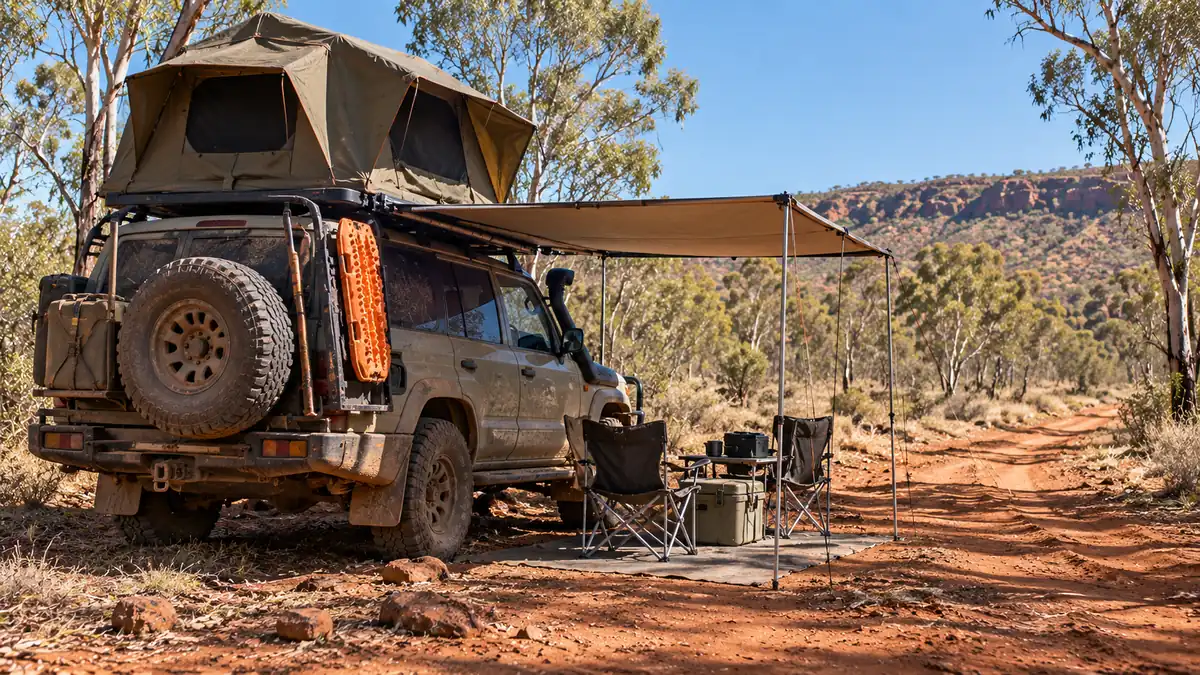
Waking up to the sound of waves with your camp set up behind the dunes is hard to beat. But beaches are tough on vehicles, gear and people. Soft sand, tides, salt, wind and sun all need respect. This guide covers the basics of getting there safely and making camp comfortable.
Beach driving rules, permits and closures vary widely between states, councils and parks. Always check the official land manager’s website and local signage before you go.
Before you go: permits and rules
- Permits: many beaches that allow vehicles require a vehicle access permit and/or a camping permit, often booked online in advance.
- Where you can drive: only on designated beaches and access tracks. Dunes and vegetation are fragile and often protected.
- Road rules still apply on many beaches: licences, registration, seatbelts, speed limits and drink-driving laws.
- Closures: beaches can close for erosion, wildlife nesting, weather or events.
- Fires and pets: check the rules for each location.
Sand driving basics
This is general guidance only. A 4WD training course that includes sand driving is a great investment.
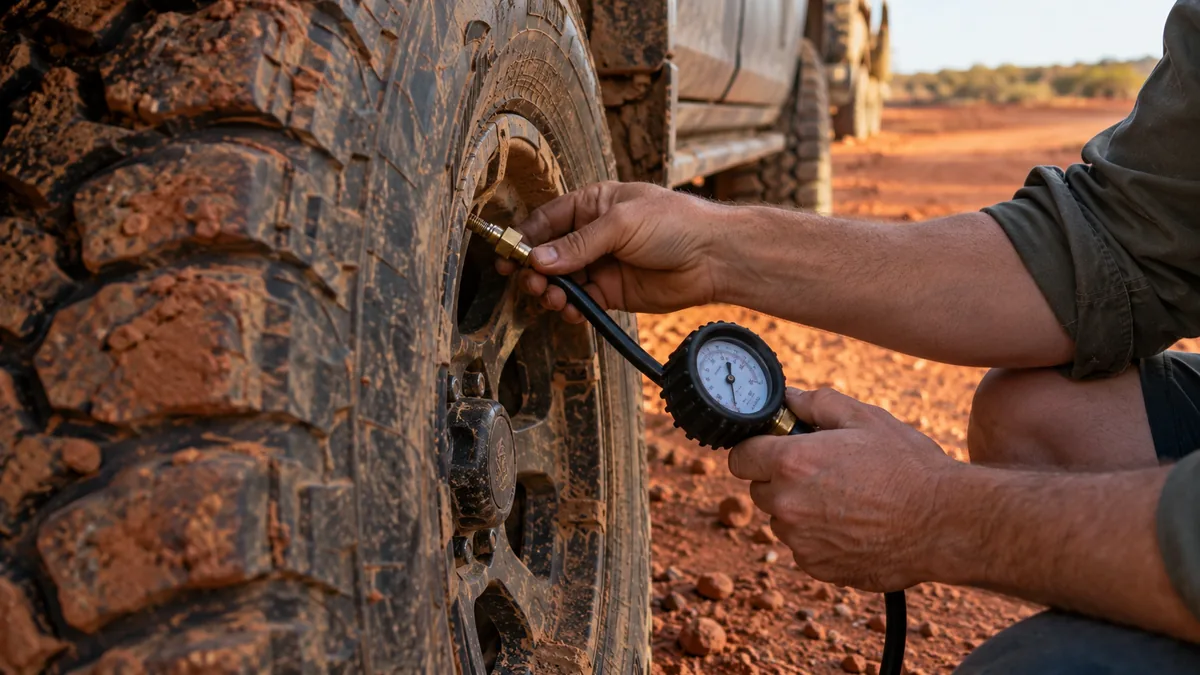
Lower your tyre pressures
Lowering tyre pressure lengthens the tyre’s footprint so it floats on soft sand instead of digging in. This is the single biggest factor in not getting stuck.
- The right pressure depends on your vehicle, tyres, load and the sand conditions. Follow your vehicle and tyre manufacturer’s guidance and local advice.
- Use an accurate tyre gauge and a tyre deflator. (tyre deflators on Amazon)
- Drive gently on lowered tyres: lower speeds, smooth steering, no sharp turns that could roll a tyre off the rim.
- Reinflate before returning to the road with an air compressor. (air compressors on Amazon)
Driving technique
- Engage 4WD before you hit the sand, and use the gear and range recommended for your vehicle.
- Keep momentum in soft sand, but don’t charge. Smooth and steady wins.
- Follow existing wheel tracks where they’re firm.
- Avoid sharp braking. Roll to a stop, ideally facing slightly downhill, so it’s easy to get going again.
- Watch for washouts, creek crossings, soft patches and other vehicles.
- Rinse your vehicle (especially the underbody) with fresh water afterwards to reduce corrosion from salt.
Tides
Tides are critical on beach drives.
- Check a tide chart for your exact location before every beach drive.
- Plan travel around low tide, when there’s more firm sand to drive on.
- Avoid driving near high tide. You can get trapped against the dunes or bogged with water rising.
- Know where your exits are.
- Never camp below the high-tide line.
If you get stuck
- Stop as soon as forward progress stops. Spinning wheels dig you in.
- Lower your tyres further (within safe limits for your tyres).
- Dig sand away from in front of the tyres and under the chassis. (folding shovels on Amazon)
- Use recovery boards under the tyres. (recovery boards on Amazon)
- Snatch recovery with another vehicle only as a last resort, with rated gear and recovery points.
Read 4WD recovery gear essentials for the full kit and safety rules. If the tide is coming in and you can’t get out, prioritise getting people to safety.
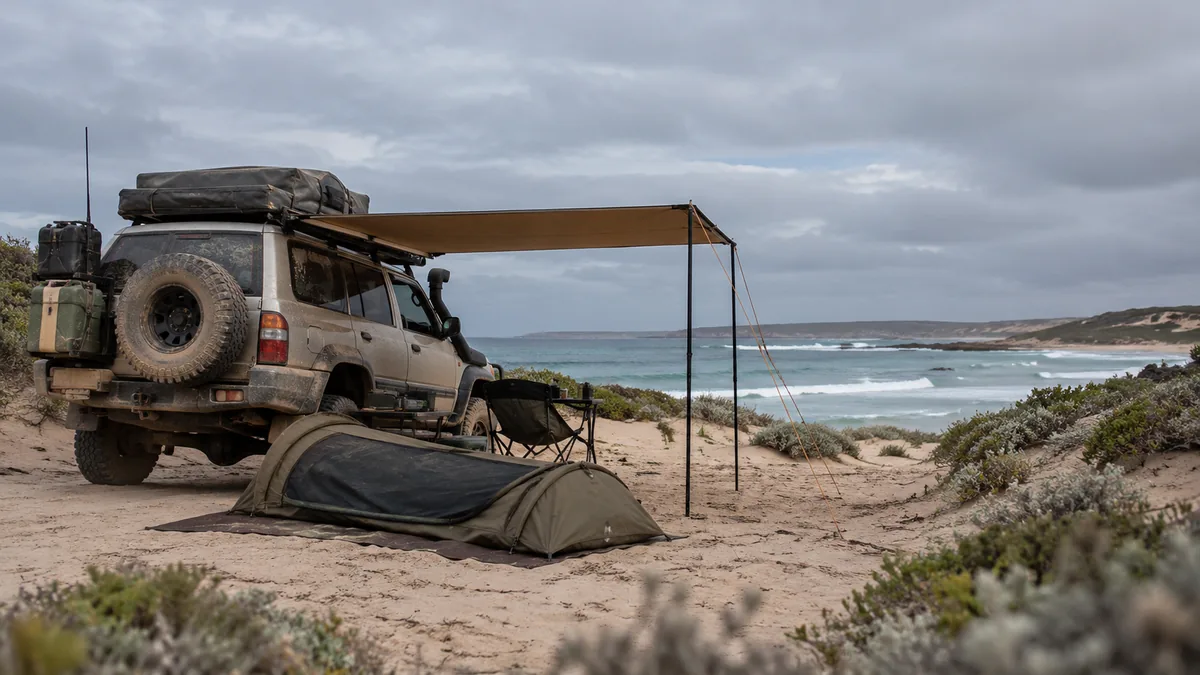
Setting up camp on sand
- Pick a sheltered spot behind the dunes, well above the high-tide line, and only in designated camping areas.
- Use sand pegs. Standard pegs pull straight out of sand. Long, wide sand pegs hold far better. (sand pegs on Amazon)
- Try “deadman” anchors in very soft sand: tie your guy rope to a sandbag, stick or stuff sack and bury it.
- Orient the tent with its narrowest, lowest end into the wind.
- Use a ground sheet and keep a brush and dustpan handy to sweep out sand.
- Set up a shoe-off zone at the tent door with a mat.
- Keep zips clean. Sand is a zip killer.
Wind
Coastal winds can pick up quickly, especially in the afternoon.
- Guy everything out properly from the start.
- Lower or remove awnings in strong wind, or angle them so the wind can’t get underneath.
- Use windbreaks for your camp kitchen and seating area.
- Pack loose items away when you leave camp.
- Stove care: use a windshield and keep the cooking area sheltered.
Sun
- Shade is essential. Awnings, gazebos or beach shelters, well anchored. (beach shelters on Amazon)
- Slip, slop, slap, seek and slide: shirt, sunscreen, hat, shade and sunglasses.
- Reapply sunscreen regularly, especially after swimming.
- Drink plenty of water. Beach heat and wind dehydrate you faster than you think.
- Watch kids closely in the sun and around water.
Swimming safety
Many remote beaches aren’t patrolled. Swim between the flags where possible, learn to spot rips, and never swim alone on an unpatrolled beach. Obey any warnings about dangerous marine creatures, including crocodiles in northern Australia.
Look after the beach
- Stay off the dunes and vegetation.
- Watch for nesting shorebirds and turtles, and obey any closures.
- Take every scrap of rubbish home.
- Follow local rules on toilets. Many beach camps require a portable toilet.
Beach camping checklist
- Vehicle and camping permits
- Tide chart for the location
- Tyre gauge, deflator and compressor
- Recovery boards, shovel and recovery gear
- Sand pegs and a mallet
- Shade, windbreak and guy ropes
- Sunscreen, hats and plenty of water
- Portable toilet (if required)
- Brush, dustpan and door mat
Top of the line vs best value
Well-known options sold in Australia, if you want a starting point. We haven’t independently tested every one, prices change often, and the right choice depends on your trip, so check current prices, specs and warranty before buying. Not ready to buy? Pop it in your Amazon cart so it’s there when you are.
Air compressor
- Top of the line: NOCO AIR20 12V compressor on Amazon · Add to Amazon cart: premium high-output portable 12V compressor.
- Best value: NOCO AIR10 12V compressor on Amazon · Add to Amazon cart: budget-friendly portable compressor for occasional use.
Recovery boards
- Top of the line: MAXTRAX MKII recovery boards on Amazon · Add to Amazon cart: premium, well-known Australian recovery boards.
- Best value: BASHIK traction mats on Amazon · Add to Amazon cart: budget-friendly traction mats for lighter recovery jobs.
Further reading
The bottom line
Get the right permits, lower your tyres, plan around the tides, carry recovery gear and anchor everything as if the wind is about to pick up. Do that, and beach camping is one of the best experiences Australia offers.