Camping in the Rain: How to Stay Dry and Comfortable
Disclosure: As an Amazon Associate, OutbackKit earns from qualifying purchases. Some links on this page are affiliate links, so we may earn a small commission if you buy through them, at no extra cost to you. We only point to gear we’d be happy to take on our own trips.
Rain doesn’t have to ruin a camping trip. With a bit of preparation, a wet weekend can be cosy and even memorable: the patter on canvas, a hot drink under the tarp, and a quiet campground. Here’s how to stay dry and comfortable when the weather turns.
Always check the Bureau of Meteorology forecast and warnings before and during your trip, and never camp where flooding is possible.
Before you go
- Check the forecast, including rainfall, wind and storm and flood warnings.
- Test your shelter at home with a hose to find leaks before you’re relying on it.
- Season new canvas before its first trip, and reproof older tents and flies when water stops beading. (tent reproofing sprays on Amazon)
- Pack waterproof layers for everyone.
- Bring a backup plan in case conditions become unsafe.
Choosing your site
Site choice is the single most important thing.
- Pick slightly elevated, well-drained ground. Avoid dips, hollows and flat areas where puddles form.
- Never camp in a dry creek bed or close to a river or creek that could rise. Water levels can rise quickly after heavy rain upstream, even when it isn’t raining where you are.
- Avoid camping under trees with dead branches. Wet, heavy limbs and strong winds can bring them down.
- Look for natural wind shelter, such as shrubs or a low rise, without being directly under trees.
- Check the access road. Unsealed roads can become impassable after rain. Know your way out.
Setting up in the rain
- Rig a tarp first if you can, and pitch your tent underneath it. (camping tarps on Amazon)
- Pitch fly-first if your tent allows it, so the inner stays dry.
- Make sure the ground sheet doesn’t stick out past the fly. Exposed ground sheets channel rainwater under your tent. Tuck it in.
- Tension the fly properly so it doesn’t touch the inner tent. Contact points wick water through.
- Guy out everything to keep the fly taut and shedding water.
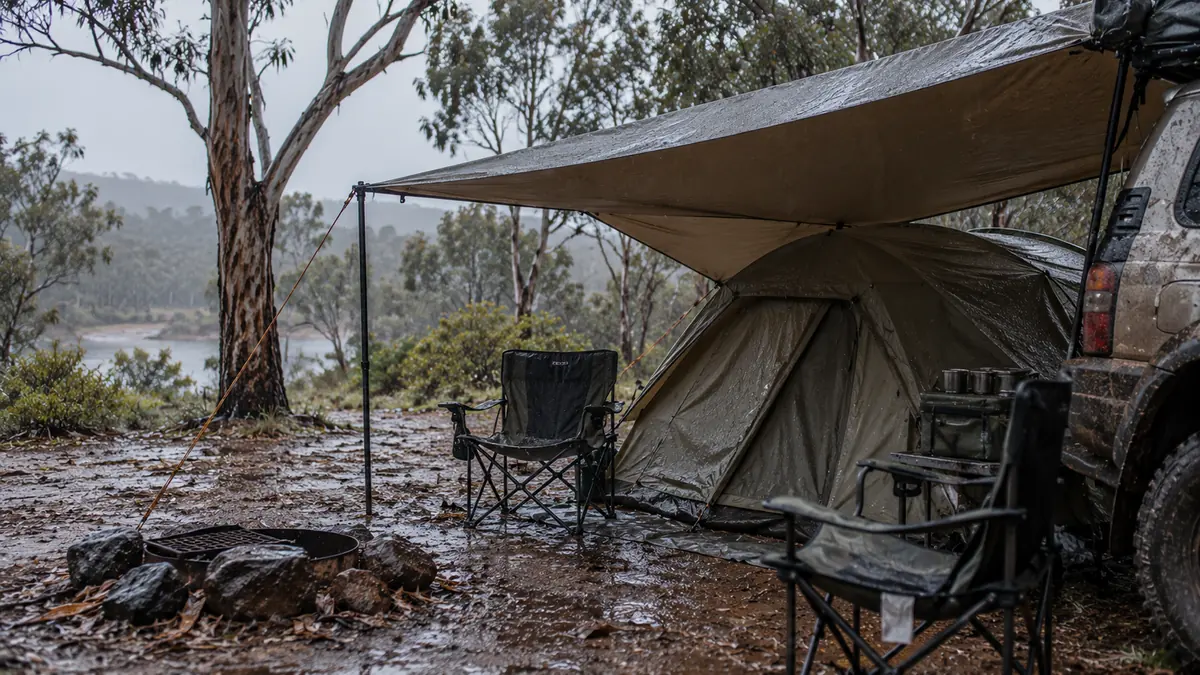
- Angle tarps so water runs off, with one corner lower to drain away from your camp. Avoid flat tarps that pool water.
Tarps: your best friend in the wet
A good tarp creates a dry living space so you’re not stuck in the tent.
- Over the kitchen and seating area
- Over the tent door, so you can get in and out without bringing rain inside
- As a windbreak on one side
- Use sturdy poles and ropes, and make sure there’s enough slope for runoff.
- Pack extra rope, pegs and a few bungee cords.
Condensation: the hidden source of damp
Even without leaks, you can wake up wet from condensation. Your breath and wet gear add moisture to the air inside your tent, and it condenses on cool fabric.
- Ventilate. Open vents and mesh windows, even when it’s raining. A little airflow makes a big difference.
- Keep wet gear out of the sleeping area. Leave wet jackets and boots in the vestibule.
- Use an anti-condensation mat under swag and mattress foam. (anti-condensation mats on Amazon)
- Canvas breathes better than many synthetic fabrics, but still needs airflow.
- Wipe down condensation in the morning with a microfibre cloth.
Keeping gear dry
- Use dry bags or plastic tubs for clothes, sleeping bags and electronics. (dry bags on Amazon)
- Pack a set of dry clothes that you only wear in the tent or to sleep.
- Keep a wet zone and a dry zone. Wet gear stays in the vestibule or under the tarp.
- Hang a drying line under the tarp for wet clothes and towels.
- Microfibre towels dry faster than cotton.
Staying comfortable and warm
- Waterproof jacket and pants, plus gumboots or waterproof shoes
- Warm layers: wet weather often feels colder than the thermometer says
- Hot food and drinks. A good feed makes a big difference to morale.
- Games, books and cards for long rainy afternoons
- A good headtorch and lantern. Rainy days get dark early. (camp lanterns on Amazon)
Packing up wet
Sometimes you have to pack up in the rain.
- Pack the inner tent first, keeping it as dry as possible, and pack the fly last.
- Keep wet and dry gear separate with large bags or tubs.
- Dry everything fully when you get home. Set up the tent or hang it out within a day or two. Canvas and nylon left damp will grow mould and can be permanently damaged.
When to call it
Know when to pack up and leave: flood or severe storm warnings, rising water nearby, falling branches, or an access road becoming impassable. No campsite is worth the risk.
See our guides to swags for beginners and swag vs tent for more on shelter.
Wet weather checklist
- Forecast and warnings checked
- Tent tested and reproofed
- Tarp, poles, extra rope and pegs
- Waterproof jacket, pants and footwear
- Dry bags or tubs
- Dedicated dry sleep clothes
- Microfibre towels and a drying line
- Anti-condensation mat
- Games and books
- Large bags for packing up wet gear
Top of the line vs best value
Well-known options sold in Australia, if you want a starting point. We haven’t independently tested every one, prices change often, and the right choice depends on your trip, so check current prices, specs and warranty before buying. Not ready to buy? Pop it in your Amazon cart so it’s there when you are.
Tent
- Top of the line: Snow Peak Land Nest Dome M on Amazon · Add to Amazon cart: premium, well-built 4-person dome tent.
- Best value: Coleman Instant Up 4-person tent on Amazon · Add to Amazon cart: budget-friendly, quick to pitch.
Further reading
- How to set up a tent
- How to sleep warm in cold weather
- Choosing camp chairs and tables
- Car camping and sleeping in your car
The bottom line
Choose high, well-drained ground away from creeks and dead branches, rig a tarp, keep the fly taut and ventilated, and separate wet gear from dry. With the right setup, rain becomes part of the adventure instead of the end of it.