How to Sleep Warm When Camping in Cold Weather
Disclosure: As an Amazon Associate, OutbackKit earns from qualifying purchases. Some links on this page are affiliate links, so we may earn a small commission if you buy through them, at no extra cost to you. We only point to gear we’d be happy to take on our own trips.
Few things ruin a camping trip faster than a freezing, sleepless night. Inland Australia, the high country and the desert can all get properly cold after dark, even when the days are warm. The good news is that sleeping warm is mostly about understanding a few principles and getting the right gear in the right combination.
Where you lose heat at night
- Into the ground. This is the big one people underestimate. Cold ground draws heat out of you, and a sleeping bag’s insulation underneath you gets squashed flat.
- Into the air, through a sleeping bag that isn’t warm enough or fits poorly.
- Through damp. Moisture from sweat, breath and condensation reduces insulation.
- From your head, if it’s exposed.
Sleeping bag temperature ratings explained
Many sleeping bags list temperature ratings, and some use a standardised test method (such as ISO 23537 or the older EN 13537). Where a bag shows these ratings, you’ll often see:
- Comfort: the temperature at which a typical person who sleeps cold should feel comfortable.
- Limit (or lower limit): the temperature at which a typical person who sleeps warm can sleep curled up without waking from cold.
- Extreme: a survival rating only. It’s not a temperature you want to sleep at.
How to use them:
- Choose using the comfort rating, especially if you tend to feel the cold.
- Ratings assume a decent sleeping mat and appropriate clothing.
- Not all brands use standardised testing, so compare ratings with caution across brands.
- Everyone sleeps differently. If you often feel cold, choose a warmer bag than you think you need.
Down vs synthetic
- Down: warmer for its weight and packs smaller, but loses warmth when wet and costs more. (down sleeping bags on Amazon)
- Synthetic: bulkier and heavier for the same warmth, but keeps some insulation when damp, dries faster and is generally more affordable. (synthetic sleeping bags on Amazon)
Shape and fit
- Mummy bags are warmer because there’s less space to heat, and they have a hood.
- Rectangular bags are roomier and more comfortable for some, but less warm.
- Fit matters. Too big leaves cold air pockets. Too tight compresses insulation.
- A draught collar and a hood make a big difference on cold nights.
Mats and R-values in plain terms
Your mat insulates you from the ground. Its R-value measures how well it resists heat flowing out of you into the ground.
- Higher R-value = more insulation = warmer.
- R-values are increasingly tested using a common standard (ASTM F3340), which makes comparisons between brands more meaningful.
- R-values add up. Stacking a closed-cell foam mat under an inflatable mat combines their insulation.
- Thick doesn’t always mean warm. An uninsulated air mattress can be thick but cold, because air circulates inside it.
(self-inflating mats on Amazon) (insulated sleeping mats on Amazon)
Layering for bed
- Wear dry base layers (thermals) to bed. Don’t sleep in the clothes you’ve sweated in all day.
- A beanie and warm socks are easy wins.
- Avoid overdressing: too many layers can compress your bag’s insulation and make you sweat.
- A sleeping bag liner adds warmth and keeps the bag clean. (sleeping bag liners on Amazon)
- An extra blanket or quilt over your bag helps too.
Tricks for a warmer night
- Eat a good dinner. Your body needs fuel to make heat.
- Have a warm (non-alcoholic) drink before bed. Alcohol can make you feel warm but increases heat loss.
- Do a few minutes of light movement before getting into bed, so you’re warm, not sweaty.
- Go to the toilet before bed. Your body wastes energy keeping a full bladder warm, and you won’t want to get up at 3am.
- A hot water bottle (filled carefully with hot, not boiling, water in a bottle designed for it) in the footbox is a classic trick.
- Fluff up your bag well before getting in.
- Keep tomorrow’s clothes in the bag (or under it) so they’re warm in the morning.
Swags in winter
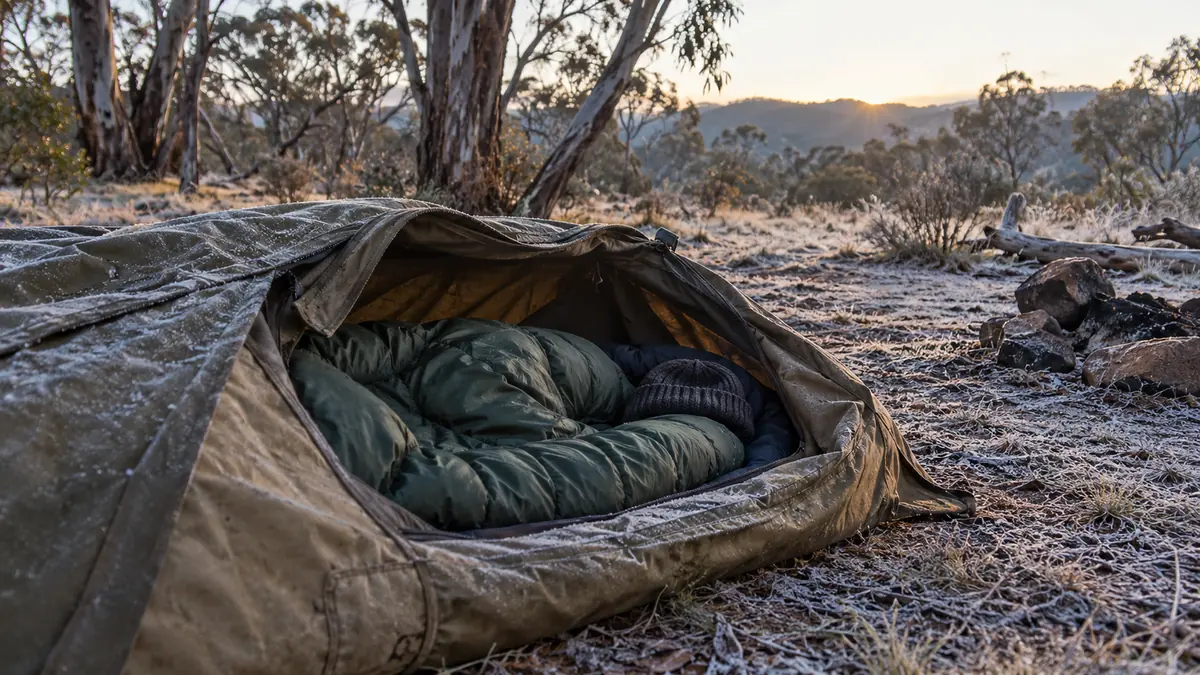
Swags can be very warm, because the canvas blocks wind and the foam mattress insulates from the ground.
- Use a warm sleeping bag inside, not just blankets.
- Use an anti-condensation mat under the mattress. Cold nights increase condensation. (anti-condensation mats on Amazon)
- Close canvas flaps over the mesh, but keep a little ventilation to manage condensation.
- A swag stretcher gets you off the cold ground, but adds airflow underneath, so put insulation under you.
- Pitch out of the wind, with the head end away from the breeze.
See swags for beginners for more.
Tents in winter
- Pick a sheltered site, out of the wind, and away from low-lying cold-air pockets such as valley floors where frost forms.
- Keep some ventilation to reduce condensation.
- Smaller tents warm up more from body heat.
- Never use fuel heaters, stoves or BBQs inside tents. Carbon monoxide can kill.
Cold weather sleeping checklist
- Sleeping bag with a suitable comfort rating
- Insulated mat (consider stacking two)
- Dry thermals, beanie and socks for bed
- Sleeping bag liner or blanket
- Hot water bottle (optional)
- Anti-condensation mat for swags
- Warm clothes for the morning
Top of the line vs best value
Well-known options sold in Australia, if you want a starting point. We haven’t independently tested every one, prices change often, and the right choice depends on your trip, so check current prices, specs and warranty before buying. Not ready to buy? Pop it in your Amazon cart so it’s there when you are.
Sleeping bag
- Top of the line: Sea to Summit Trailhead ThII sleeping bag on Amazon · Add to Amazon cart: premium synthetic bag rated to about 5°C.
- Best value: Coleman Mountain Ridge sleeping bag on Amazon · Add to Amazon cart: budget-friendly bags for mild conditions.
Sleeping mat
- Top of the line: Sea to Summit Camp Plus SI mat on Amazon · Add to Amazon cart: premium, well-insulated mat.
- Best value: Logos Easy Valve self-inflating mat on Amazon · Add to Amazon cart: budget-friendly mats for milder trips.
Further reading
The bottom line
Insulate from the ground first, choose a sleeping bag by its comfort rating, sleep in dry layers, and eat and drink something warm before bed. Get those right, and cold nights become some of the best camping, with clear skies and a warm bed.