Camping Near Sydney: How to Choose the Right Campsite
Disclosure: As an Amazon Associate, OutbackKit earns from qualifying purchases. Some links on this page are affiliate links, so we may earn a small commission if you buy through them, at no extra cost to you. We only point to gear we’d be happy to take on our own trips.
One of the great things about living in Sydney is how quickly you can swap the city for the bush, the beach or the mountains. National parks ring the city, and within a few hours’ drive there are hundreds of places to pitch a tent. The hard part is choosing. This guide won’t hand you a “top 10” list that’s out of date by next season. Instead it shows you how to pick the right campsite for your trip, and where to check the details that change.
Campground details, fees, bookings and closures change often. Always check the official NSW National Parks and Wildlife Service website (or the relevant land manager) before you go.
Step 1: decide what kind of trip you want
Start with the experience, not the location.
- Easy first trip or family weekend: a campground with toilets, running water and car-based sites, not too far from home.
- Beach camping: coastal parks north and south of the city.
- Mountains and cooler nights: the Blue Mountains and the ranges west of Sydney.
- Remote and quiet: fewer facilities, longer drives, possibly a 4WD track or a walk-in site.
- Walk-in or hike-in camping: carry everything on your back to a site away from the car.
Step 2: understand the types of campgrounds
National parks
Run by NSW National Parks and Wildlife Service. Well-known parks around Sydney include Royal National Park to the south, Ku-ring-gai Chase National Park to the north and the Blue Mountains National Park to the west, among many others further afield. Many park campgrounds must be booked in advance and some charge fees and park entry. Rules typically cover fires, pets and generators. National parks generally don’t allow dogs.
State forests
Managed by Forestry Corporation of NSW. State forests often have simpler camping areas, and some allow more flexible camping. Rules on where you can camp, fires and pets differ from national parks, and areas can close for forestry operations or fire risk. Check Forestry Corporation’s website for current conditions.
Private and holiday parks
Caravan parks and private campgrounds usually offer the most facilities: hot showers, powered sites, camp kitchens and sometimes pools and playgrounds. They are often the easiest choice for a first trip or with young kids, and many allow dogs.
Free camping
Free camps and rest areas exist across NSW, but rules vary by council and land manager. Some allow overnight stays only, some only for self-contained vehicles, and many have time limits. Don’t assume a spot is legal just because others are camped there. Check council signage and websites, and use camping apps as a guide rather than the final word.
Step 3: check the facilities you need
Before booking, confirm:
- Toilets (flush, drop or none)
- Drinking water. Many bush campgrounds have none, or untreated water only. Bring your own. (water containers on Amazon)
- Showers
- Fires allowed? Fire pits, BYO fire pot, or fires banned entirely? Total fire bans override everything.
- Car-based or walk-in sites. How far will you carry gear?
- Site size and surface. Room for your tent, swag or camper? Grass, dirt or gravel?
- Shade, especially in summer
- Phone coverage, if you need it
- Pets allowed?
- Generators allowed?
Step 4: booking and timing
- Book early for school holidays, long weekends and summer. Popular coastal campgrounds near Sydney can book out well ahead.
- Midweek and off-season trips are quieter and easier to book.
- Check cancellation policies. Weather can turn quickly.
- Arrive in daylight so you can find your site and set up safely.
Step 5: check conditions right before you leave
- Park alerts and closures on the NSW National Parks website
- Fire danger ratings and total fire bans on the NSW Rural Fire Service website
- Weather and flood warnings from the Bureau of Meteorology
- Road conditions, particularly for unsealed access roads after rain
Choosing the best spot within a campground
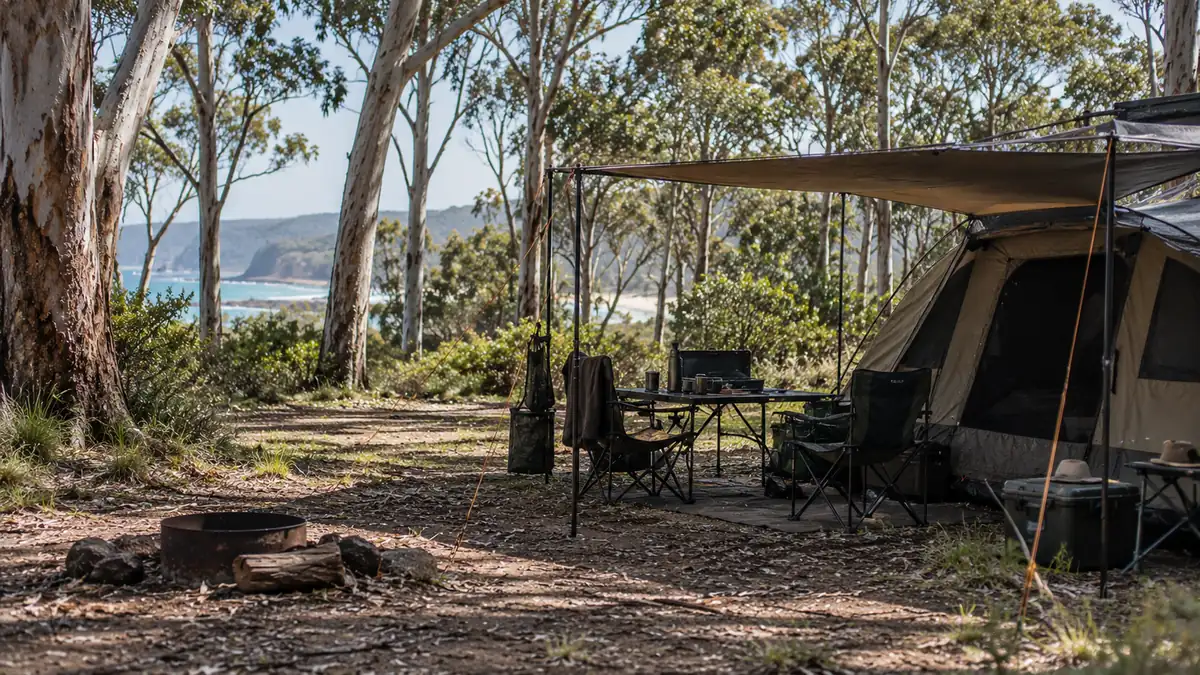
- Pick level ground that isn’t in a dip where water will pool.
- Look up. Don’t camp under dead branches or large overhanging limbs. Gum trees can drop branches without warning.
- Think about the sun. Morning shade is welcome in summer, and morning sun in winter.
- Note the wind direction, and set up your kitchen downwind of your tent.
- Don’t camp too close to toilets (smells and foot traffic) or too far (night walks).
- Respect neighbours. Leave space between sites and keep the noise down after dark.
What to pack for a first trip near Sydney
A short trip close to home is the perfect shakedown. You don’t need much:
- Tent or swag, sleeping bags and mats (tents on Amazon)
- Camp chairs and a small table
- Stove, gas and basic cookware (camp stoves on Amazon)
- Esky with ice
- Headtorches and a lantern
- Water, sunscreen, insect repellent and a first aid kit
See your first outback camping trip checklist for a complete list, and swag vs tent if you’re choosing a shelter.
Leave no trace
Take all rubbish home, stay on tracks, use existing fire pits only when fires are permitted, and leave the site cleaner than you found it. Popular campgrounds near big cities get a lot of use, so a little care goes a long way.
Further reading
- Free camping in NSW
- Dog-friendly camping in Australia
- Camping near Melbourne
- The Australian camping checklist
The bottom line
Decide on the experience you want, pick the right type of campground, check the facilities and book early for busy periods. Then check alerts, fire bans and the weather right before you go. Do that, and some of the best camping in Australia is only a short drive from Sydney.