Camping Near Melbourne: How to Choose the Right Campsite
Disclosure: As an Amazon Associate, OutbackKit earns from qualifying purchases. Some links on this page are affiliate links, so we may earn a small commission if you buy through them, at no extra cost to you. We only point to gear we’d be happy to take on our own trips.
Melbourne is a great base for camping. Within a few hours you can be on the coast, in tall mountain forest, by a river in the high country or out among the granite and wildflowers further west. The trouble is choosing. Searching “best camping near Melbourne” mostly gives you lists of the same busy spots, booked out every long weekend.
Instead of another list, this guide helps you work out what kind of campsite suits your trip, so you can find good spots yourself. We’ve kept it general on purpose, because conditions, fees and booking rules change. Always check the official land manager before you go.
Step 1: Decide what kind of trip it is
Answer these first and the options narrow fast:
- How far do you want to drive? For a Friday night getaway, two hours is plenty. A long weekend can stretch to four or five.
- Who’s coming? Kids may want toilets, showers and a playground. A couple might want quiet and no neighbours.
- What’s your setup? Some campsites are walk-in only, some have room for caravans, and some tracks need a 4WD.
- Do you need facilities? Toilets, water, fire pits, power or none at all?
- Dogs? Pets are generally not allowed in national parks, but many state forests and private parks do allow them.
Step 2: Understand who runs the land
This is the most useful thing to understand about camping in Victoria, because different land managers have different rules, fees and booking systems.
National and state parks
Run by Parks Victoria. You usually get beautiful scenery and well-kept sites with basic facilities. Popular sites need to be booked ahead and pay fees, often through the Parks Victoria booking system, and busy parks book out in summer and school holidays. Pets are usually not allowed. Some remote sites are free and first-come.
State forests
Many state forests are managed by the state government’s forest and land agency. They often have free or low-cost camping with basic or no facilities. They can be more relaxed, often dog-friendly, and good for 4WD access. Some sites may need booking, and seasonal road closures can apply, especially in the high country over winter. Check the current rules for the area.
Holiday parks and private campgrounds
Caravan parks, holiday parks and farm stays have the most facilities: showers, power, camp kitchens and sometimes pools. They’re easy for beginners and families, but busier and pricier. Farm stays and private bush camps listed on booking sites can be a nice middle ground.
Council and free camps
Some councils allow camping in specific reserves. Rules vary a lot, so check signs and the council website. Don’t assume a nice spot by the road is legal to camp.
Step 3: Pick your landscape
Within reach of Melbourne you’ve got several broad options:
- The coast. Beaches and coastal parks are hugely popular in summer. Expect wind, sun and very busy holiday periods. Book early.
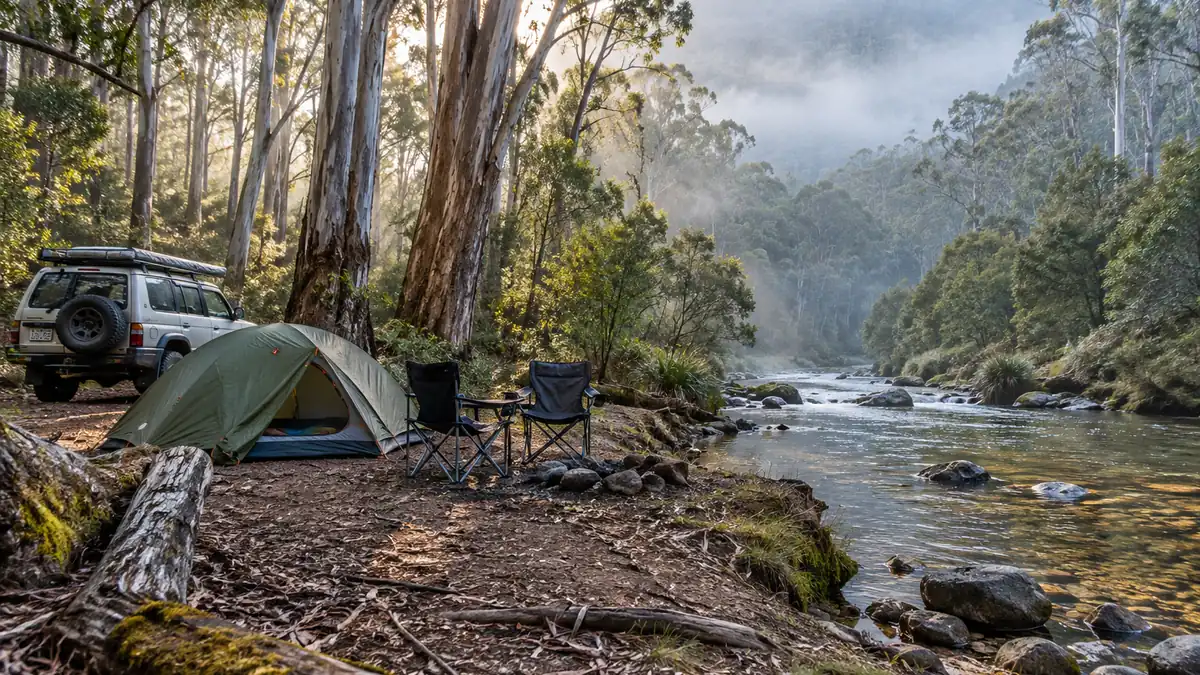
- Mountain forests and ranges. Tall forest, cooler temperatures and river camping. Nice in summer heat, but cold and wet in winter.
- The high country. Further out, with rivers, huts and 4WD tracks. Some tracks have seasonal closures, and it can snow well into spring.
- Western grasslands and granite country. Bushwalking, rock formations and wildflowers in spring. It can be hot and dry in summer.
- Rivers and lakes. Great for swimming, fishing and kayaking. Check for floods and river levels after rain.
Step 4: Think about the season
Victoria’s weather catches people out more than almost anywhere in Australia. The “four seasons in one day” joke exists for a reason.
- Summer: Book coastal spots early. Fire danger is the big risk. Check the fire danger rating and total fire bans on the CFA website or VicEmergency before and during your trip, and know your exit.
- Autumn: Often the best time to camp. It’s calmer, with fewer crowds and nice temperatures, but nights get cold.
- Winter: Cold, wet and windy. Some high-country tracks close. It’s great for cosy campfire trips if you pack well. See our sleeping warm guide.
- Spring: Wildflowers, but unpredictable weather and wet tracks. Pack for rain. See our camping in the rain guide.
Step 5: Check the site details before you book
When you’ve found a likely spot, check:
- Access: 2WD, 4WD only, or walk-in? Are there gates or seasonal closures?
- Facilities: toilets, water (and whether it’s drinkable), fire pits, rubbish bins
- Site size and shade: can your tent, caravan or camper fit?
- Fires: Are campfires allowed, and only in fire rings? See our campfire safety guide.
- Mobile coverage: often patchy in forests and valleys
- Recent reviews: look for comments on noise, crowds, track condition and mozzies
- Park alerts: closures after storms, floods or fire are common
Step 6: Avoid the crowds
- Go midweek if you can. A Sunday night or Monday to Wednesday can be a totally different experience.
- Book early for peak times. Christmas, Easter and long weekends book out months ahead.
- Go a bit further. An extra half hour past the famous spots is often enough to find quiet.
- Try shoulder seasons. Autumn especially.
- Have a backup plan for first-come sites, and arrive early.
Step 7: Pack for Victoria
On top of the usual gear (see our camping checklist), Victoria trips need:
- Warm sleeping gear, even in summer for mountain areas
- A good rain jacket and a tarp
- Layers for big temperature swings
- Insect repellent for river and coastal sites
- Firewood, if fires are allowed. Collecting it can be restricted in parks, so check or buy it.
Safety basics
- Tell someone where you’re going and when you’ll be back
- Check the weather and fire danger rating every day
- Don’t camp under big trees with dead limbs
- Know where the nearest mobile coverage is
- Download offline maps
Quick decision guide
If you’re still stuck, start here:
- First-timers or young kids: a holiday park or a national park campground with toilets and water, within two hours of home.
- Couples after quiet: a midweek state forest or remote national park site, booked or checked ahead.
- Dog owners: a state forest or a dog-friendly private campground. Check the rules first.
- 4WD crew: high-country or forest tracks, checking seasonal closures and track conditions.
- Summer heat escape: mountain forest or river sites, with an eye on fire danger.
Whatever you pick, have a plan B. Popular sites fill up, roads close and weather changes, so a second option within the same area saves a long, frustrating drive.
Final word
The best campsite near Melbourne is the one that suits your trip, not the one at the top of a list. Work out your drive time, who’s coming and what facilities you need. Then check the land manager, the season and the details, and you’ll find quiet spots most people miss. If you’re heading north instead, our camping near Sydney guide works the same way.