First Aid and Emergency Comms for Remote Camping
Disclosure: As an Amazon Associate, OutbackKit earns from qualifying purchases. Some links on this page are affiliate links, so we may earn a small commission if you buy through them, at no extra cost to you. We only point to gear we’d be happy to take on our own trips.
When you’re camping remote, help can be hours or even days away. A good first aid kit, the training to use it, and reliable ways to call for help are some of the most important things you can carry. This guide explains what to pack and how the main emergency communication options differ.
This guide is general information only, not medical advice. Do an accredited first aid course, and follow official guidance from organisations such as the Australian Maritime Safety Authority (AMSA) for beacons.
Get trained first
A first aid kit is only as useful as the person using it.
- Do an accredited first aid course through a registered training provider. Organisations such as St John Ambulance and Australian Red Cross offer courses, and some providers run remote-area or wilderness first aid courses.
- Refresh your skills regularly. CPR in particular is commonly recommended to be refreshed more often than full first aid.
- Make sure more than one person in your group knows first aid.
The remote first aid kit
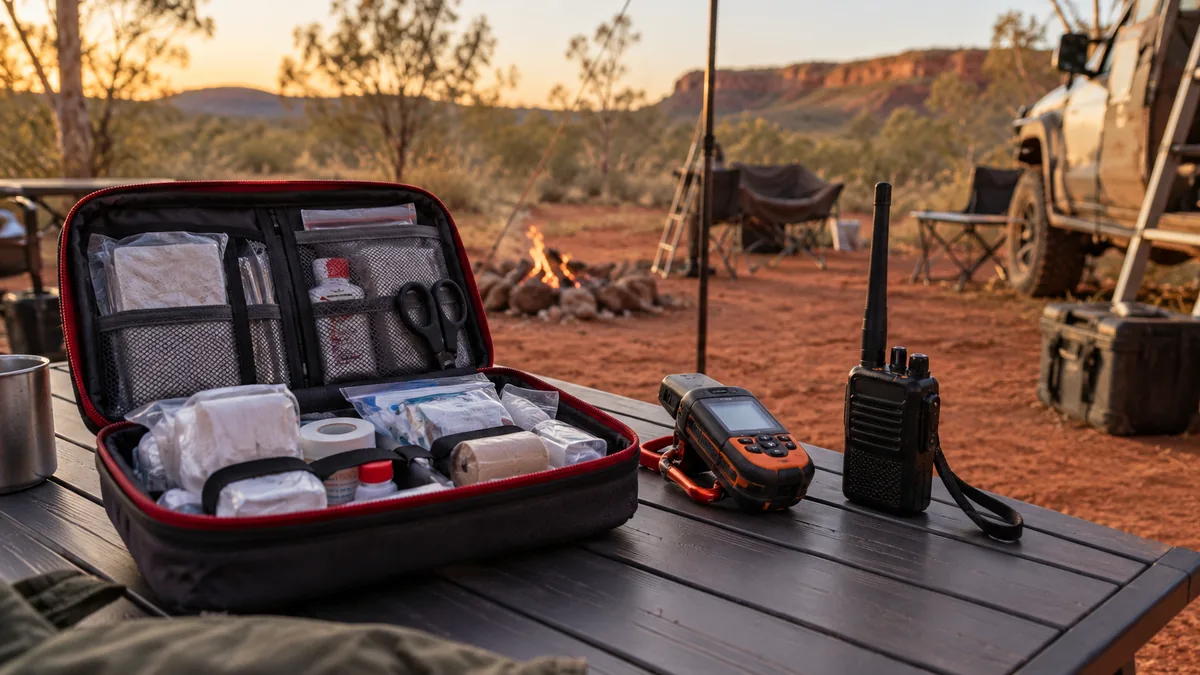
A remote kit should be more comprehensive than a basic car kit, because you may be managing an injury for a long time. (remote first aid kits on Amazon)
Core items
- Compression/pressure immobilisation bandages for snake bite (several, as you may need more than one)
- Wound dressings of various sizes, non-stick pads and gauze
- Adhesive tape and adhesive strips
- Triangular bandages and crepe bandages
- Antiseptic and saline for cleaning wounds
- Burn dressings or gel
- Tweezers, scissors and a tick remover
- Disposable gloves
- CPR face shield
- Space (emergency) blanket
- Splint (e.g. a mouldable splint)
- First aid manual or reference app
- Personal medications, plus extra in case you’re delayed
- Pain relief and antihistamines suitable for your group, used according to the label
- Sunscreen, insect repellent and lip balm
- Notepad and pencil to record symptoms and times
Check your kit before every trip. Replace used items and anything past its expiry date. (snake bite compression bandages on Amazon)
Know the Australian specifics
- Snake bite: learn the pressure immobilisation technique on a course. Keep the person still and call for help.
- Heat illness: know the signs and how to cool someone down.
- Bites and stings: spiders, ticks and marine creatures.
- Dehydration: see our camping water guide.
Emergency communications in plain terms
Mobile coverage is patchy or absent across much of Australia. Carry more than one way to call for help.
Personal locator beacon (PLB)
- What it does: sends a distress signal with your location via satellite to search and rescue authorities. In Australia, these are coordinated through AMSA.
- Best for: life-threatening emergencies only.
- Pros: works almost anywhere with a clear view of the sky, no subscription, and long battery life.
- Cons: one-way. You can’t send details or know help is coming. Only for genuine emergencies.
- Register your beacon with AMSA. Registration is free, and it gives rescuers your emergency contacts and vehicle details. Keep the registration up to date.
- Check the battery expiry date.
(personal locator beacons on Amazon)
Satellite messenger or communicator
- What it does: sends and receives text messages via satellite, shares your location, and usually has an SOS button.
- Best for: check-ins with family, non-emergency help (like a breakdown), and emergencies.
- Pros: two-way messaging, tracking, and you can explain what’s happening.
- Cons: usually needs a subscription, and battery life depends on use.
(satellite communicators on Amazon)
Satellite phone
- Voice calls via satellite. Useful for detailed communication, but generally more costly to buy and run.
- Some newer smartphones and networks offer satellite messaging features. Check what your phone and plan actually support, and don’t rely on it as your only option.
UHF CB radio
- What it does: short-range two-way radio, widely used by 4WDers and truck drivers.
- Best for: convoy communication, talking to road trains and nearby travellers, and local help.
- Range: limited by terrain, antenna and power. Repeaters can extend range in some areas.
- Emergency channels: learn which channels are designated for emergencies, and respect them.
- Not a replacement for a PLB or satellite device in remote areas.
Mobile phone
- Download offline maps, carry a power bank and know where coverage is.
- Emergency calls to 000 (or 112 on mobiles) may connect via other networks if available.
A sensible remote setup
- PLB (registered) for life-threatening emergencies
- Satellite messenger for two-way contact and check-ins
- UHF radio for local and convoy communication
- Mobile phone with offline maps and a power bank
Trip plan
- Leave your route, campsites, vehicle details and expected return with a reliable person.
- Agree on check-in times and what they should do if you miss one.
- If you break down, stay with your vehicle.
See planning a remote outback trip for the full planning picture.
Top of the line vs best value
Well-known options sold in Australia, if you want a starting point. We haven’t independently tested every one, prices change often, and the right choice depends on your trip, so check current prices, specs and warranty before buying. Not ready to buy? Pop it in your Amazon cart so it’s there when you are.
Personal locator beacon
- Solid choice: ACR ResQLink 400 PLB on Amazon · Add to Amazon cart: well-proven GPS PLB from a major beacon maker.
- Solid choice: Ocean Signal rescueME PLB1 on Amazon · Add to Amazon cart: compact PLB that comes pre-programmed for Australia.
UHF radio
- Top of the line: Oricom DTX600 5W handheld UHF on Amazon · Add to Amazon cart: premium rugged 5W handheld.
- Best value: Oricom UHF2200 twin pack on Amazon · Add to Amazon cart: budget-friendly handhelds, sold as a pair.
Further reading
The bottom line
Get trained, carry a comprehensive and up-to-date first aid kit, register your PLB with AMSA, and carry more than one way to call for help. Hopefully you’ll never need any of it, but if you do, it matters more than any other gear you own.