Free Camping in Victoria: How to Find Legal Free Campsites
Disclosure: As an Amazon Associate, OutbackKit earns from qualifying purchases. Some links on this page are affiliate links, so we may earn a small commission if you buy through them, at no extra cost to you. We only point to gear we’d be happy to take on our own trips.
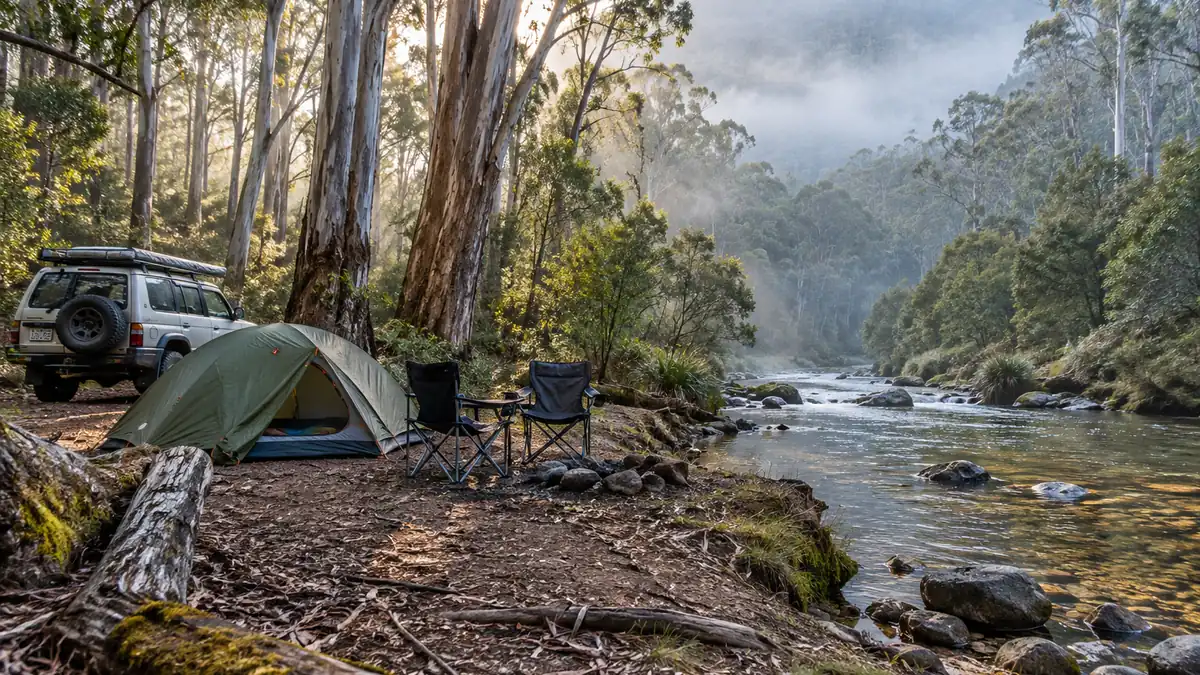
Victoria packs a lot of free and low-cost camping into a small state: river flats in the High Country, quiet clearings in state forests, and simple bush campgrounds a few hours from Melbourne. The catch is that the rules depend on who manages the land. Here’s how to find legal free campsites and keep them open.
Rules, closures and fees change, and they differ between land managers and councils. Always check the current rules for the exact spot before you go, and obey any signs on site.
Where free camping is usually allowed in Victoria
- State forests. Many Victorian state forests allow free camping, both in signposted campgrounds and, in many areas, dispersed camping away from them. Forest Fire Management Victoria and the Department of Energy, Environment and Climate Action (DEECA) publish current information, closures and planned burns.
- Some Parks Victoria campgrounds. Many national park campgrounds need booking, and some charge fees, but there are also basic sites with no or low fees. Check the Parks Victoria website for the specific campground and whether it needs booking.
- Council free camps and rest areas. Some councils provide free or low-cost camping, often with a time limit. Others ban overnight camping. Read the signs.
- Showgrounds, recreation reserves and farm stays are often low-cost rather than free, and usually have toilets and showers.
How to find a legal spot
- Official sources first. Forest Fire Management Victoria, Parks Victoria and the local council are the final word on whether camping is allowed.
- Camping apps. Community apps list free sites with recent reviews and photos. Read the latest reviews, as access and rules change.
- Visitor information centres know which tracks are open and which areas are closed.
- Seasonal road closures. Many High Country and forest tracks close seasonally, often over the cooler, wetter months. Check closures before you go.
What to expect at free camps
- Few or no facilities. Many free sites have no toilets, water or bins. Be self-sufficient.
- Water: bring enough, and treat anything from a creek or river. Our camping water guide covers filters and treatment. (water filters on Amazon)
- Toilets: bring a portable toilet if there’s none, or follow proper bush toilet practice where allowed. Our camping toilet options guide covers both. (portable camping toilets on Amazon)
- Rubbish: take everything out with you.
- Phone reception: often patchy in forests and valleys. Tell someone your plans.
Fire and weather in Victoria
- Check fire danger ratings and Total Fire Bans on the CFA website or VicEmergency app before you light anything. No campfires on Total Fire Ban days.
- Fire restrictions in parks and forests can apply even without a Total Fire Ban. Use existing fireplaces where provided. Read our campfire safety guide.
- Cold nights. Inland and alpine areas can get very cold, even outside winter. Pack a warm sleeping setup. See how to sleep warm when camping.
- Rain and rivers. Rivers can rise fast after rain upstream. Don’t camp in dry creek beds or on low river flats when rain is forecast.
Free camping etiquette
- Leave it cleaner than you found it. Follow the Leave No Trace principles.
- Respect time limits and move on when your stay is up.
- Keep noise down, especially generators and music.
- Dogs: generally not allowed in national parks, but often allowed in state forests. Check first, and see our dog-friendly camping guide.
- Support local towns by buying fuel and supplies there.
Your free camping checklist
- Confirmed camping is allowed and the area is open
- Fire danger rating and fire restrictions checked
- Enough water, plus a way to treat creek water
- Toilet plan
- Rubbish bags (heavy-duty rubbish bags on Amazon)
- Warm sleeping gear for cold nights
- Someone knows where you’re going
For a full gear list, see what to pack for camping in Australia. Heading out from the city? Read how to choose a campsite near Melbourne.
Top of the line vs best value
Well-known options sold in Australia, if you want a starting point. We haven’t independently tested every one, prices change often, and the right choice depends on your trip, so check current prices, specs and warranty before buying. Not ready to buy? Pop it in your Amazon cart so it’s there when you are.
Sleeping bag
- Top of the line: Sea to Summit Trailhead ThII sleeping bag on Amazon · Add to Amazon cart: premium synthetic bag rated to about 5°C.
- Best value: Coleman Mountain Ridge sleeping bag on Amazon · Add to Amazon cart: budget-friendly bag for mild conditions.
Water filter
- Top of the line: Katadyn Hiker Pro filter on Amazon · Add to Amazon cart: premium pump filter with a proven track record.
- Best value: Sawyer Squeeze on Amazon · Add to Amazon cart: budget-friendly, lightweight filter.
Further reading
The bottom line
Most free camping in Victoria is in state forests, plus some basic Parks Victoria and council sites. Check the land manager’s rules and fire restrictions for each spot, be self-sufficient, pack for cold nights and leave no trace.